
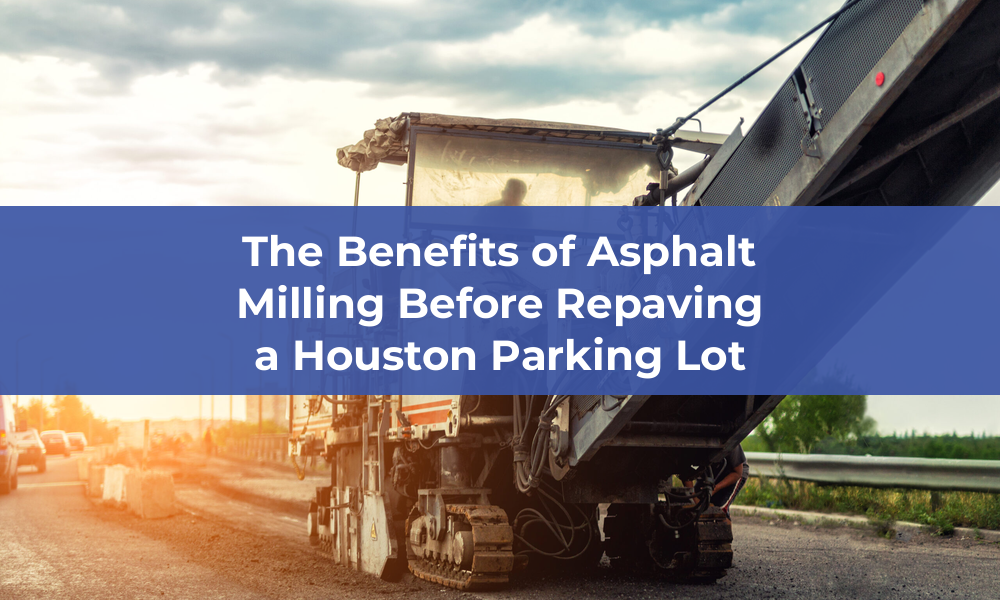
Asphalt milling is a mandatory part of the process when repaving most Houston parking lots. It guarantees better quality repaving work and will extend the life of the new surface course of asphalt. Here is how asphalt milling benefits parking lots:
- Removes existing surface damage and corrects surface-level irregularities
- Creates a strong bond for the new asphalt
- Maintains proper drainage
- Preserves existing curb and drain heights
- Extends the pavement’s life
- Improves the parking lot’s appearance
- Supports sustainable construction practices
Asphalt milling provides all of these benefits while costing less than full pavement replacement, making it a favored option for many property owners.
Why is Asphalt Milling Often Recommended When Repaving a Houston Parking Lot?
There are several benefits associated with the asphalt milling process when it is implemented before repaving a Houston parking lot. Here is a deeper look at why a reputable paving crew may recommend the process:
Removing existing surface damage and correcting surface-level irregularities
When the parking lot’s asphalt surface is milled and removed, any cracks, potholes, warping, depressions and worn aggregate are also removed. Removing these surface flaws prevents the new surface course of asphalt from being affected by those flaws.
If the existing asphalt is not milled down first, the new surface course will often develop the same flaws and deteriorate faster, as a result.
Creating a strong bond for the new asphalt
The asphalt milling process textures the exposed pavement surface as it removes the old surface course. This has a beneficial side effect of promoting better adhesion between the old pavement and new surface course. The textured pavement allows better adhesion of the new asphalt.
Better adhesion improves pavement integrity and load distribution. It also reduces the risk of rutting, aggregate loss and other surface-level issues.
Maintaining proper drainage
Asphalt milling removes the top inch or two of pavement and repaving replaces it with a new surface course. The result is a parking lot with the same elevations and same grade. Both are important for ensuring proper drainage patterns.
If the parking lot is repaved without milling, it will raise the pavement and therefore interfere with how it drains.
Preserving existing curb and drain heights
If the asphalt is not milled down first, the repaving process will produce elevation mismatches between the parking lot and adjacent structures. This includes curbs, gutters, storm drains, sidewalks and accessibility ramps, which can lead to ADA and safety issues.
Asphalt milling preserves relative height differences and ensures the parking lot remains ADA compliant.
Extending the pavement’s life
Asphalt milling removes surface flaws and many of the risk factors that would threaten the new asphalt. If cracks, potholes and other issues are resolved first, the new surface course will last longer and provide better protection for the pavement’s deeper layers. That results in a parking lot that will withstand wear and traffic-related loading better and therefore last longer.
Improving the parking lot’s appearance
Asphalt milling helps pavement contractors place an even, smooth layer of fresh asphalt over the existing pavement. This promotes an improved and fresh outcome for your parking lot, which can be important for attracting potential customers or tenants to the property.
Supporting sustainable construction practices
Asphalt milling supports material efficient construction processes, as the old pavement surface can be repurposed as part of the new asphalt mix. This keeps the old asphalt out of the landfill, which is good for the environment and good for the budget of the project.
What Does the Asphalt Milling Process Typically Include?
Asphalt milling, like all pavement projects, is managed in several steps. Those steps include:
A site inspection and evaluation
First, the pavement team will inspect the parking lot and evaluate its overall condition. The goal is to spot any damage that would threaten the new surface course. During the inspection, the pavement team will also note elevations and the existing asphalt’s thickness, both of which must be factored in when repaving.
Preparing the project site
Prior to any extraction or milling work, the pavement team will prepare the project site by restricting vehicle access and marking utilities, drains, manholes and other structures. This ensures work can be done safely and efficiently.
Milling down the parking lot surface
Now the milling work is ready to begin. During asphalt milling, a specialized milling machine is run over the parking lot’s surface. This milling machine is equipped with a rotary drum with teeth that plane down the parking lot’s surface to a predetermined depth. The removed asphalt is either hauled off or used as material in the new surface course.
Cleaning the exposed pavement surface
The deeper pavement layers are now exposed and must be prepared to take the new surface course. This includes cleaning the pavement’s surface, ensuring no contaminants infiltrate the new asphalt.
Repairing any base issues
Before the new surface course is applied, any base issues must be repaired. This includes depressions or parts of the base that have shifted. During base repairs, the soil is stabilized for sufficient weight bearing. This step is necessary for guaranteeing long-term results for the new parking lot surface.
Applying tack coat
The last step before installing the new surface course is applying a layer of tack coat to the exposed pavement. Tack coat is an asphalt emulsion that acts like a “glue,” promoting better adhesion between the existing pavement and the new surface layer of asphalt.
Repaving the parking lot
The parking lot is now ready for its new surface layer of asphalt. During repaving, the pavement team will use asphalt pavers to install a new layer (or layers) of fresh hot mix asphalt. Asphalt pavers are designed to place asphalt with precision thickness, ensuring even curing and performance.
Once the new surface course is installed, the pavement team will roll it out with a compactor to stabilize it and improve loadbearing capacity. After the asphalt cures, it will be striped with parking lot lane markings, directional arrows, fire lanes and any ADA markings.
Consider Asphalt Milling Services When Repaving a Parking Lot for the Best Results
Asphalt milling services are often recommended before repaving a parking lot in Houston for the numerous benefits. Removing the worn pavement surface ensures the new asphalt will adhere better to the existing pavement. It also protects the parking lot’s drainage structures and guarantees longer lasting results.
If your parking lot needs a new surface course of asphalt, work with a pavement contractor who pairs asphalt overlaying with asphalt milling. That will ensure maximum cost efficiency, parking lot longevity and weather protection during Houston’s wet and hot seasons.
Asphalt Milling Before Repaving: FAQs
What is asphalt milling?
Asphalt milling uses a specialized machine with a toothed rotary drum to plane the parking lot’s surface down to a predetermined depth, removing the old surface course. The removed asphalt is either hauled off or used as material in the new surface course.
Why is milling recommended before repaving a parking lot?
Milling removes cracks, potholes, warping, depressions and worn aggregate so those flaws are not carried into the new surface course. It also textures the exposed pavement, which helps the new asphalt bond to it.
Does asphalt milling affect parking lot drainage?
It protects it. Milling removes the top inch or two of pavement and repaving replaces it, so the parking lot keeps the same elevations and the same grade. Both are important for ensuring proper drainage patterns.
What happens if a parking lot is repaved without milling first?
The new surface raises the pavement and interferes with how it drains. It also creates elevation mismatches with curbs, gutters, storm drains, sidewalks and accessibility ramps, which can lead to ADA and safety issues.
Is the milled asphalt reused?
Yes. The old pavement surface can be repurposed as part of the new asphalt mix. That keeps the old asphalt out of the landfill, which is good for the environment and good for the budget of the project.
What is tack coat and why is it applied?
Tack coat is an asphalt emulsion applied to the exposed pavement as the last step before the new surface course goes down. It acts like a glue, promoting better adhesion between the existing pavement and the new layer of asphalt.

- Land Grading 101: Why Proper Grading Prevents Costly Problems Later - October 22, 2026
- What to Expect During a Commercial Demolition and Site Clearing Project in Houston - October 13, 2026
- Paving for HOAs: A Houston Property Manager’s Guide to Parking Lot Maintenance - October 8, 2026