
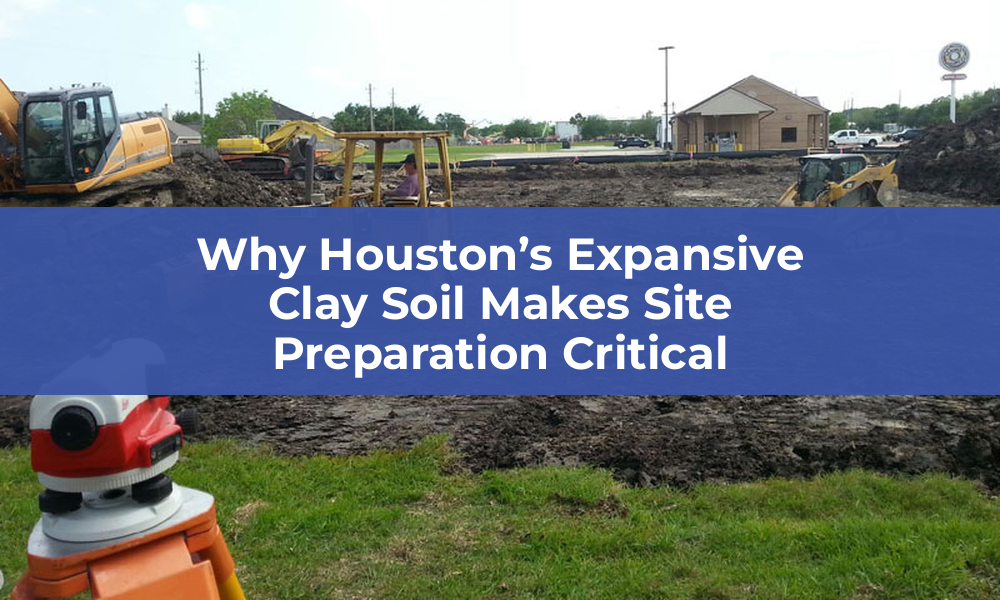
Most of Houston is blanketed by clay-rich soils that are highly impermeable and slow to drain. There are small pockets of soil around the region that do not fall under this category, but anyone investing in property development must be ready for Houston’s expansive clay soil.
This means that site preparation is critical for mitigating the effects of impermeable, slow draining soils. With expert site preparation services, property owners can protect their new construction from damage caused by poor soil composition.
What is the Risk of Building on Expansive Clay Soils?
Houston’s black clay soil (also termed “black gumbo”) is excellent for agricultural reasons, but it can be challenging to build upon because of the following:
It swells when it is wet and shrinks when it is dry
The biggest issue with Houston’s expansive clay soils is how it reacts to moisture. During heavy rains, clay soils rapidly expand with intense force. When that rain dries out, the clay soil shrinks rapidly in response. This frequent shrink and swell cycle can cause the soil to shift.
It drains slowly when wet but absorbs water when it is dry
Clays soils soak up water like a sponge when they are dry but reject further absorption at a certain point. Once the clay soils can no longer uptake water, it can quickly overwhelm drainage infrastructure.
How Does Site Preparation Protect New Construction from Expansive Clay Soils?
Houston’s expansive clay soils are difficult to build on, but a knowledgeable site preparation crew can handle the task. As Houston is a rapidly developing city, it is is a workable problem, but only if construction includes precision site development. That is because site preparation can help with the following if clay-rich soils are present:
Promoting efficient drainage away from buildings
Site preparation crews shape and grade the build site to ensure water flows where it should. The goal is to keep runoff from collecting around building foundations, pavement and pedestrian areas. If clay-rich soils are saturated near building foundations, the resulting swell and shrink will place intense stress on those foundations. Site preparation establishes high-capacity, fast-flowing drainage channels designed to capture runoff and direct it away from the property.
Reducing movement caused by soil expansion and shrink
The most severe issues related to expansive clay soils result from differential soil movements. In other words, if one part of the property tends to shift more than the rest of the property, this multiplies swell and shrink related stresses. Site preparation aims to minimize differential movement by creating uniform soil characteristics across the build site. This can be done by stabilizing soils or by cutting and filling areas with higher quality materials.
Stabilizing building pads
Site preparation teams also establish uniform build characteristics directly beneath build pads through soil stabilization and compaction. This prevents movement from affecting the buildings’ foundations.
Coordinating build plans with onsite soil composition
Sometimes, the best decision is to rework the build plan so new construction is positioned away from the lowest quality build soils. The site preparation team will identify where expansive clay soils are highly concentrated and aim to work around them.
Protecting underground utilities from expansive soil conditions
Underground utilities are also threatened by expansive clay soils. Site preparation companies formulate strategies to protect utilities against soil shifting and ensure essential services are not interrupted.
In short, site preparation shields foundations and infrastructure from a challenging one-two combination: Houston’s expansive clay soils and the city’s frequent heavy rains.
What Site Preparation Services are Recommended with Houston’s Expansive Clay Soils?
If an organization is developing a property and about to invest in new construction, the following site preparation services will ensure the foundations and buildings are protected from Houston’s expansive clay soils:
Land surveying
During land surveying, the site preparation team will walk the property and inspect it for any potential construction-related challenges. This includes identifying expansive clay soils. If necessary, the site preparation and development team can adjust build plans to mitigate risks.
Site grading
Site grading involves establishing efficient slopes and elevations for drainage. The process is completed over several passes and may require extensive earth moving, cutting and filling. When done properly, site grading ensures runoff is captured and directed away from structures.
Soil and build pad stabilization
During soil stabilization, the site prep company will use mechanical (compaction) and chemical (lime, cement) processes to improve the soil’s load bearing properties. This also minimizes any soil related movement caused by the swell and shrink process.
Drainage construction
The most reliable way to mitigate flooding risks is to build out efficient drainage structures. This may include curb and gutter systems, catch basins, culverts, and retention/detention ponds. Every Houston property is different, and each requires a unique drainage solution. Site prep crews can identify which structures are right for the development goals.
Experienced site preparation teams know what to expect from Houston’s clay-rich soils, as they are present all over the city and surrounding areas.
Expert Site Preparation Services Know How to Handle Houston’s Expansive Clay Soils
Clay-rich soils threaten building foundations and pavement, and they can also worsen flooding during heavy rain events. Given the frequency of heavy rain events in Houston, it is important to work with a knowledgeable site prep crew that understands the area’s soil and issues.
Partnering with a proven site preparation team in Houston means access to effective site surveying, site grading, soil stabilization and drainage construction services. Together, these services can neutralize the damaging effects of Houston’s expansive clay soils and ensure the new construction is built on a firm foundation.
Houston Expansive Clay Soil and Site Preparation: FAQs
What is black gumbo soil?
Black gumbo is the local name for Houston’s black clay soil. It is excellent for agriculture, but it is expansive: it swells with force when it gets wet and shrinks again as it dries, which makes it challenging to build on without site preparation.
Why is expansive clay soil a problem for new construction?
The shrink and swell cycle causes the soil to shift. When one part of a property moves more than the rest, that differential movement multiplies the stress placed on foundations, pavement and underground utilities.
Does all of Houston sit on expansive clay soil?
Most of it does. There are small pockets of soil around the region that do not fall under this category, but anyone investing in property development in the Houston area should plan for expansive clay.
How does site preparation reduce soil movement?
By creating uniform soil characteristics across the build site. That is done by stabilizing soils, by cutting and filling areas with higher quality materials, and by compacting and stabilizing the ground directly beneath building pads.
Which site preparation services matter most on clay-rich sites?
Land surveying, site grading, soil and build pad stabilization, and drainage construction. Together they identify where expansive clay is concentrated, move runoff away from structures, and improve the soil’s load bearing properties.
Why does clay soil make drainage harder in Houston?
Dry clay soaks up water like a sponge, then rejects further absorption at a certain point. Once it can no longer take on water it can quickly overwhelm drainage infrastructure, which is why heavy rain events and clay soils compound each other.

- Paving for HOAs: A Houston Property Manager’s Guide to Parking Lot Maintenance - October 8, 2026
- Commercial Parking Lot Striping in Houston - October 2, 2026
- What is Soil Stabilization and Why Does Your Houston Project Need It? - September 24, 2026