
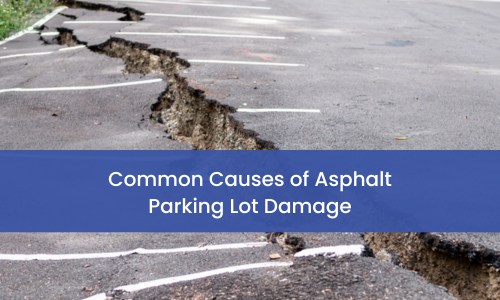
Asphalt parking lots in Houston have to handle a lot of traffic, heavy rains and extreme heat. Over time, this wear and weather will lead to damage, which should be addressed before it leads to significant pavement failure.
If your property features an asphalt parking lot, watch for the following sources of damage:
- Poor grading or drainage construction methods
- Poorly executed installation techniques
- Excessive vegetation growth
- Heavy vehicle traffic
- Heavy rains and water intrusion
- Intense sun and heat
Some of these common causes of asphalt damage are avoidable, but most are not. That is why partnering with a pavement contractor for on-time asphalt maintenance is necessary for maximizing parking lot lifespan and performance.
What Are the Six Most Common Causes of Asphalt Parking Lot Damage in Houston?
Pavement wear and damage are unavoidable. However, what is avoidable is total pavement failure resulting from routine wear caused by:
- Poor grading or drainage construction methods – Asphalt parking lot damage may be caused by issues that come before the pavement is installed. This includes grading and drainage construction.
During grading, the parking lot’s base is shaped and compacted. If the base is not graded with precision, and if the base is not sufficiently compacted, the asphalt will be installed on an unstable foundation. This may lead to warping, depressions and cracking that cannot be permanently corrected.
Parking lots also require efficient drainage to prevent water from collecting and intruding into the asphalt. This includes drainage structures like gutters, catch basins and drainage trenches. If these are not positioned and installed properly, it is only a matter of time before excessive runoff overwhelms the parking lot. - Poorly executed installation techniques – Quality materials and quality installation practices are both needed to guarantee the pavement’s long-term durability. When installing the parking lot, a stable base course typically made from gravel or crushed stone is installed first. Multiple layers of asphalt are overlaid over the base, and this must be done with precision. If the asphalt is not installed evenly, it will result in weaknesses susceptible to worsening damage.
Curing is another important step that inexperienced or cut-rate contractors frequently foul up. Common curing issues include poor temperature control, a bad mix or poor curing timing. If any of these interfere with your parking lot’s curing processes, it may result in micro flaws in the asphalt that will not be obvious until it sustains significant damage. - Excessive vegetation growth – Prior to asphalt installation, your parking lot contractor should clear the site of excessive vegetation. If they fail to do so, that vegetation may develop root structures that penetrate into the parking lot’s edges and cause significant edge cracking. Those root structures may also intrude into the pavement’s drainage structures and cause blockages, accelerating water-related wear.
The only way to avoid this is to partner with a pavement contractor that is willing to provide quality site clearing services. - Heavy vehicle traffic – Heavy traffic is a constant in Houston, and it is also a threat to asphalt parking lots. Asphalt is capable of withstanding heavy loads and for extended periods of time, but it does have a limit. For example, if a parking lot is used as a long-term holding area for commercial trucks, the asphalt will eventually buckle and crack under that weight. Fatigue cracking is a common sign of weight-related damage.
- Heavy rains and water intrusion – Nothing deteriorates an asphalt parking lot faster than water penetrating into its surface. If water reaches the asphalt’s deeper layers, it will eat away at its binders. Once the binders fail, the asphalt’s surface will collapse under its own weight, opening up potholes, which will eventually lead to even worse damage.
A top priority for asphalt installers is to ensure adequate drainage to prevent water intrusion from causing damage to your parking lot. - Intense sun and heat – Houston’s intense heat and UV radiation are another common source of damage for asphalt parking lots, though the kind of damage they cause may not be obvious at first. Intense heat softens asphalt and reduces its surface integrity, which can lead to significant damage if it is then exposed to heavy traffic or impact. UV radiation attacks the binders in the asphalt’s surface, which will discolor and cause the pavement to become brittle. In effect, UV accelerates the aging process for asphalt.
- Poor grading or drainage construction methods – Asphalt parking lot damage may be caused by issues that come before the pavement is installed. This includes grading and drainage construction.
Why is Professional Maintenance Essential for Minimizing Asphalt Parking Lot Damage?
Asphalt can sustain damage from many common sources, but that damage can be minimized with consistent pavement maintenance. Asphalt maintenance fortifies weak spots in the pavement and provides additional protection for its surface and base.
To extend your parking lot’s lifespan and to enhance its performance, make sure the following maintenance routines are performed on time:
-
- Asphalt sealcoating – Asphalt sealcoating is applied immediately following installation and every 18-24 months thereafter. Made from an asphalt emulsion mix, asphalt sealcoat is spray applied to the parking lot’s surface and provides a layer of wax-like protection. It defends against UV radiation, it slows water intrusion and it restores the asphalt’s binders, which improves its weight-bearing capacity. It is the most cost-effective form of asphalt maintenance and is essential for maximizing pavement life.
- Asphalt crack and pothole repairs – Cracks and potholes are common issues for asphalt pavement, and particularly common for parking lots, where heavy weight-bearing forces are expected. When they do emerge, it’s important to repair cracks and potholes as quickly as possible, as they represent weak areas in your parking lot and allow water to penetrate the pavement.
During asphalt crack repairs, your pavement team will melt rubberized asphalt and deposit it directly into the crack, providing a long-term, flexible seal. Pothole repairs are more involved, as the failed pavement must first be sawcut away from the parking lot and extracted. The exposed base is then stabilized so the pothole does not re-emerge. A layer of tack coat is then applied inside the exposed pavement surfaces, and a new batch of hot mix asphalt is rolled into the patch. The new asphalt patch will typically be ready for use within 72 hours.
- Asphalt overlaying or asphalt milling – Once your parking lot reaches the midway point during its lifespan, it will be time to consider an asphalt overlay, or asphalt milling if the pavement is damaged or significantly worn.
During an overlay, a fresh layer of hot mix asphalt is rolled out over the existing parking lot surface. As long as the pavement is mostly intact and does not have issues that extend through its surface to deeper pavement layers, an overlay will act like a new shell for the parking lot and greatly extend its life, sometimes by 10 years or more.
However, if your pavement has sustained damage that extends through its surface, such as deep fractures or potholes, then asphalt milling and surface replacement will likely be recommended. During asphalt milling, the top inch or two of pavement is removed with milling machines that pulverize the surface. Once this is done, the removed asphalt is either hauled off or used as the base material for a new surface course of asphalt. Following milling, any defects in the base are corrected and stabilized, then a layer of tack coat is sprayed on the exposed deeper layers of pavement. This tack coat is essentially a binder for a new surface course of asphalt that is carefully layered on the existing pavement and compacted using a roller. Asphalt milling and surface replacement also extends the pavement’s life by several years and is much more cost effective than full parking lot reconstruction.
Property owners should also schedule regular power sweeping, as this will prevent surface debris from intruding into cracks or potholes.
Partner With a Parking Lot Expert to Minimize the Damage to Your Asphalt Parking Lot
It is impossible to avoid all sources of parking lot wear and damage, but as long as your business or organization is partnered with a proven pavement company, you will have access to quality asphalt maintenance. That will boost your parking lot’s lifespan and performance and delay an expensive replacement project.

- Asphalt Milling vs. Overlay vs. Full Replacement - April 7, 2026
- Common Concrete Repairs in Houston - March 27, 2026
- Foundations and Flatwork: When to Coordinate Concrete Work with Paving - March 11, 2026