
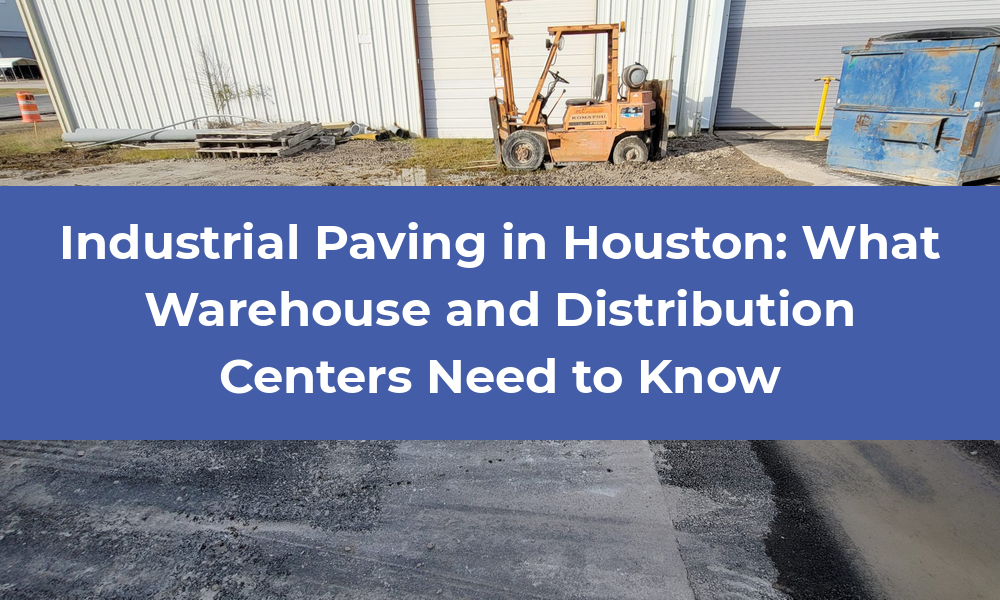
Warehouse and distribution centers in Houston see a lot of heavy traffic every day, placing their pavement under extreme stress. For these properties, industrial paving in Houston is essential for guaranteeing long-term performance from asphalt or concrete. Understanding how industrial paving works — and how it differs from a standard parking lot — helps warehouse and distribution center owners protect one of their largest site investments.
That is especially true along the Houston Ship Channel, where we handle commercial concrete and asphalt paving in Pasadena for plants and warehouses that move heavy loads every day.
What Are the Differences Between Industrial Paving and Standard Parking Lot Pavement?
Industrial paving prioritizes stronger pavement that is designed to hold up under heavier traffic and withstand wear better. Specifically, here is how industrial paving differs from standard commercial pavement:
Rated for heavier traffic loads
Standard commercial pavement is designed for passenger vehicles or light delivery and work trucks at moderate traffic volumes. Industrial paving establishes stronger pavement that is built for heavier loading — constant freight movement, stationary trailer loads, and repeated heavy axle loads that create high turning pressure. That kind of loading is behind many of the most common causes of asphalt parking lot damage when standard pavement is used on an industrial site.
Thicker pavement layers
Standard commercial pavement and industrial paving also differ in thickness. Typically, asphalt is installed with 4 to 8 inches of aggregate for the base and 2 to 4 inches of asphalt over that. Industrial paving aims for 6 to 12 inches of pavement over a deeper aggregate base, and reinforcement systems may be used to stabilize the pavement further.
Durable pavement mix
Industrial paving may include a mix that features harder binders and heavier aggregate structures. That means greater rutting resistance and higher compressive strength.
Extensive subgrade and base preparation
Industrial paving focuses more on the underlying soil structure than typical commercial pavement does. When installing industrial-grade pavement, contractors invest in deeper excavation, additional soil stabilization (lime or cement treatment), and geotextile reinforcement. Thorough site preparation is what allows heavy-duty pavement to perform as designed.
Advanced drainage structures
Efficient drainage is essential for industrial pavement, as heavier traffic will quickly wear down pavement when water is also involved. For this reason, industrial paving prioritizes advanced drainage structures like reinforced trench drains, large-capacity storm basins, precision grading, and additional detention infrastructure. It also helps to understand the difference between detention and retention ponds before sitework starts.
Why Is Industrial Paving Important for Houston Warehouses and Distribution Centers?
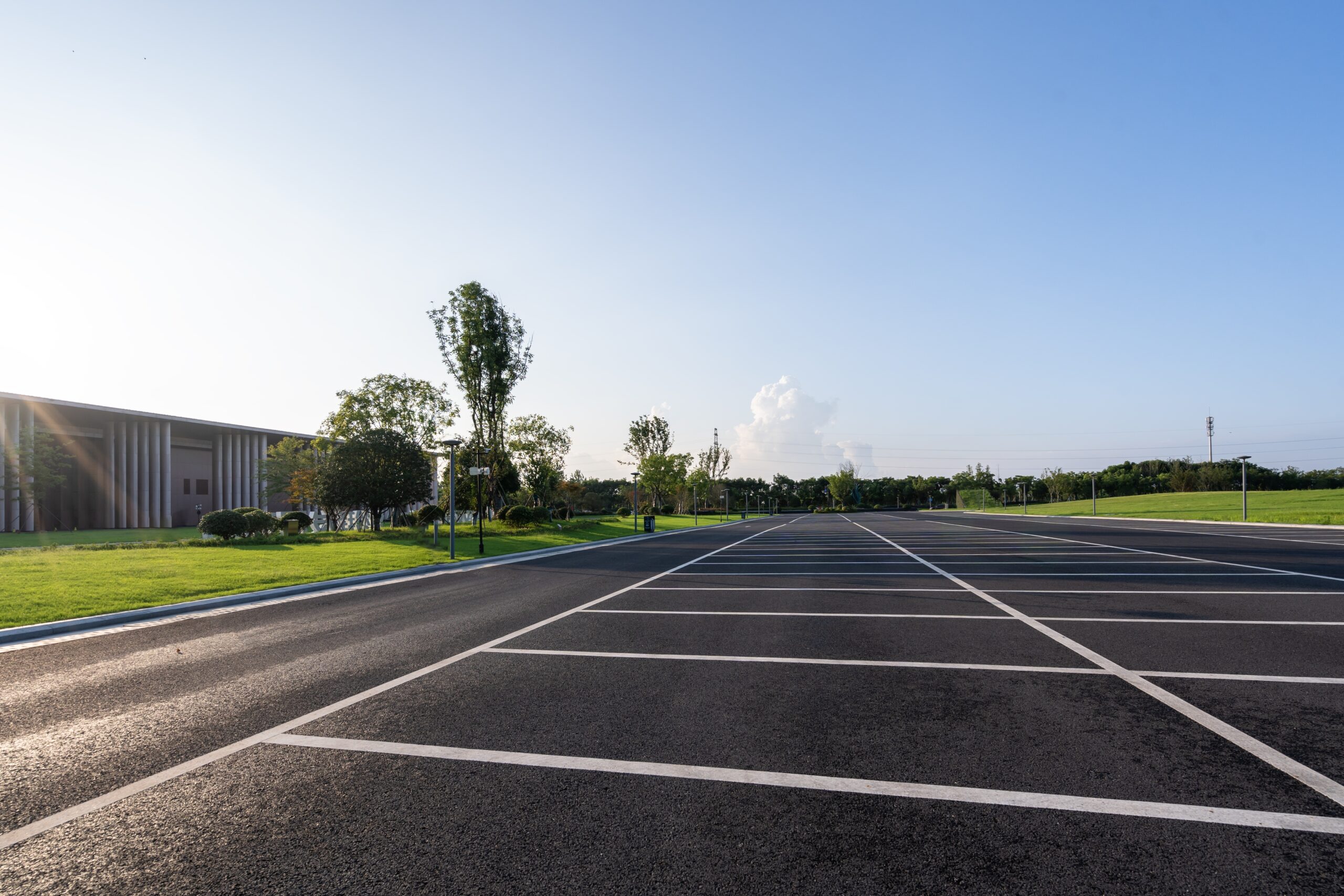
Industrial paving goes beyond standard asphalt or concrete. It is more durable and more resistant to wear, loading, and weather. For Houston warehouses and distribution centers, that matters for several reasons:
Extended lifespan
Industrial paving withstands compressive and abrasive forces better than standard commercial pavement. As a result, it maintains its condition and lasts longer — which changes the math on when it is time to resurface, overlay, or replace the pavement.
Superior performance
Over time, wear and warping can affect traffic patterns as the surface’s condition declines. That can force heavier traffic to avoid certain areas, including loading docks, which reduces efficiency. Industrial paving installs higher-quality pavement that retains its stability over time, reducing surface damage and the need for frequent asphalt parking lot repair.
Better safety
A damaged pavement surface can force commercial traffic into pedestrian areas and higher-traffic zones like forklift alleys. Because industrial pavement is more likely to withstand surface-level wear, it is also the safer option.
Optimal long-term value
Increased durability and better performance add up to improved overall value. Industrial paving delivers both, with longer-lasting pavement and superior surface performance.
What Should Houston Property Owners Consider When Installing Industrial Paving?
Warehouse and distribution center owners in Houston have several things to weigh before investing in industrial paving. To ensure they get maximum value and are prepared for the process, they should consider the following:
Expected traffic loads
The most important consideration is the traffic the property will receive — both weight and volume. Consider how often semi-trucks and heavy work trucks will use the pavement, the maximum axle loads and forklift traffic, and whether the property will be used for trailer storage. These factors determine pavement thickness, base thickness, material selection, and whether reinforcement is necessary.
Pavement material selection
Part of the process is determining whether concrete or asphalt is ideal. In Houston, concrete is often preferred for its compressive strength and superior thermal resistance, and professional concrete construction is well suited to high-load areas. Hybrid solutions are also common, with asphalt used in lower-stress sections and concrete in higher-traffic areas — which is why it pays to coordinate concrete work with paving from the start.
Subgrade condition
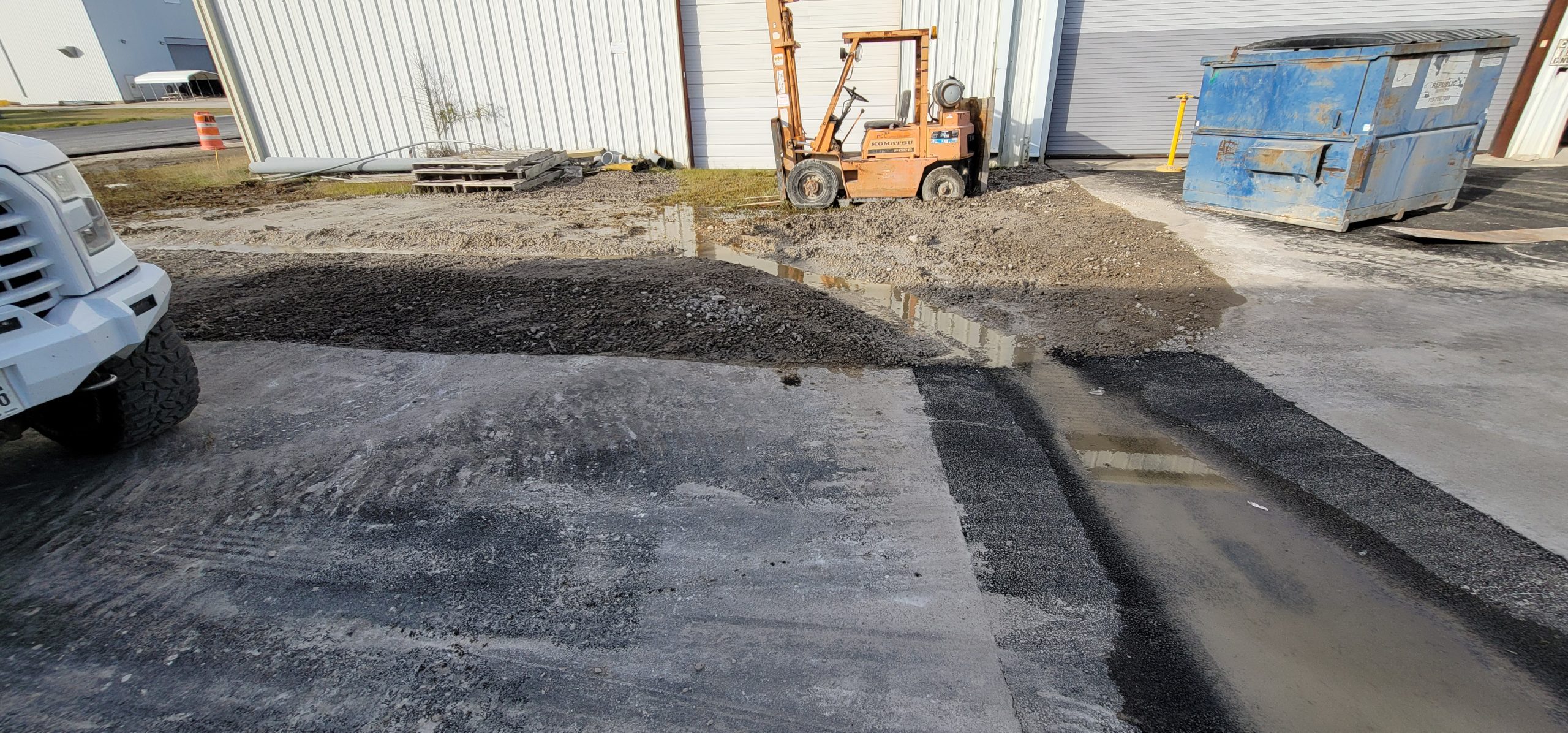
The subgrade (soil) condition has a big impact on the industrial paving process. Poor-quality subgrade can lead to settlement, cracking, rutting, and other surface deformation. Clay-rich soils and a high water table increase moisture content in soils, which makes matters worse. An industrial paving crew can mitigate these issues with cement or lime stabilization and by cutting out weak soils — and by helping owners avoid site clearing mistakes that create drainage problems later.
Drainage and runoff management
Drainage management is a major consideration, and the property owner may need to invest in advanced drainage structures to protect the pavement. This includes expanded retention and detention capacity, reinforced trench drains, storm sewer installation, and additional land grading passes.
Construction logistics
Industrial paving disrupts access to the pavement, but with an experienced crew that disruption can be minimized. Phased construction, truck routing, and performing work during off-hours are all options the pavement team should consider.
Industrial Paving Is Designed for Houston Warehouses and Distribution Centers
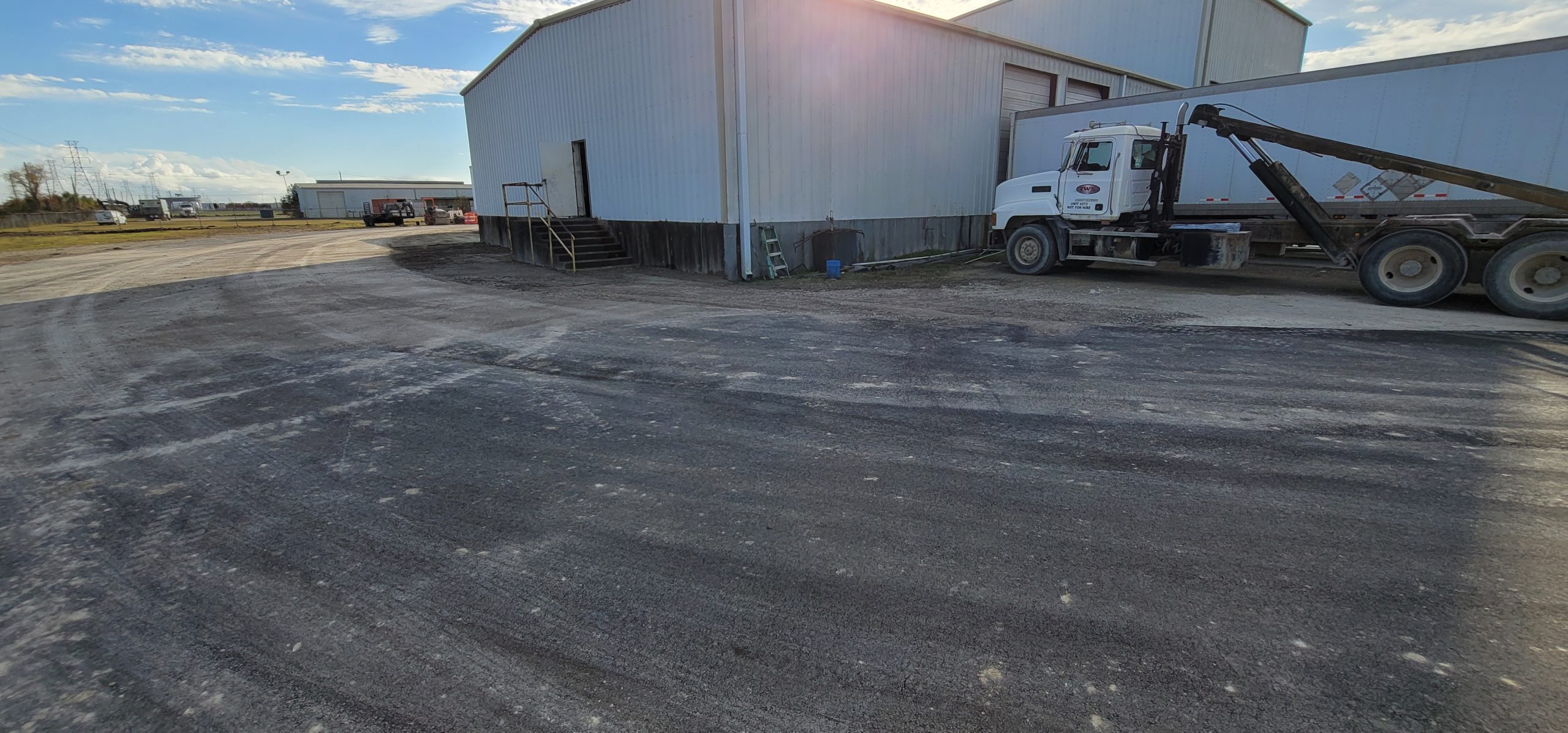
If a property takes in a lot of commercial traffic each day, industrial paving is essential for protecting the warehouse or distribution center’s pavement investment. Standard commercial pavement — the kind used for parking lots — is not designed for the repeated wear and heavy loading that comes with industrial traffic.
For these Houston properties, industrial pavement is a proven solution that offers superior durability and performance, as long as it is installed by an expert Houston pavement contractor. To plan an industrial paving project for your warehouse or distribution center, contact American Paving at 281-328-8296.
