
Asphalt parking lots in Houston require regular maintenance to remain reliable for handling traffic. However, it is only a matter of time before the parking lot will require repaving.
Repaving your asphalt parking lot will restore its appearance and much of its durability and is typically recommended when your parking lot is showing signs of distress. If you believe you need asphalt parking lot repaving services, there are steps you can take to reduce the related cost and prepare for the job.
What is Involved in Repaving an Asphalt Parking Lot?
Asphalt repaving is sometimes confused with asphalt overlaying, but the terms are not interchangeable. During an overlay, a new layer of asphalt is installed directly over the existing pavement. On the other hand, the asphalt parking lot repaving process is different and involves the following steps:
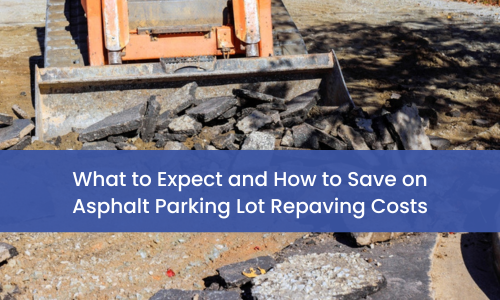
- Milling down the existing parking lot surface – Before a new layer of asphalt pavement can be installed, the existing asphalt must be removed first. This is done with asphalt milling machines, which pulverize the pavement surface down to a prespecified depth. Every asphalt milling machine is equipped with a rotary drum that chews up the asphalt, which can then be reclaimed as material for a new batch of hot mix, or hauled off for proper disposal or recycling.
- Repairing any base defects – Once the asphalt’s surface is milled down, any base issues will need to be corrected to ensure the repaved asphalt does not fail prematurely. This includes correcting depressions, subsidence and fractures that extend through the pavement’s base.
- Applying tack coat to the exposed pavement – Following any base repairs, the pavement team will spray a layer of tack coat to the exposed pavement’s surface. Tack coat is made from asphalt emulsion and acts like an adhesive, bonding the new asphalt to the existing pavement. Tack coat is essential for any successful surface course and improves repaving results.
- Installing a new layer of hot mix asphalt – With the tack coat applied, it is time to install the new hot mix asphalt and let it cure. The new surface course is installed using asphalt paving machines and is rolled out using a roller compactor, which ensures maximum stability and load bearing capacity.
- Restriping the new asphalt – The new asphalt is in place, but it still needs to be striped to ensure the parking lot can be safely used. During restriping, the pavement team will place parking lot lane markings, fire lane markings, handicap spaces, loading zones and any other markings necessary for compliance.
Once the asphalt repaving process is complete, it will remain stable for several years before another round of extensive maintenance is required. You will extend the parking lot’s life further if base failures are properly corrected before rolling out the new layer of hot mix.
How Can Property Owners Save on Their Asphalt Repaving Costs?
Although parking lot repaving is not as expensive as removing the asphalt down to its base and replacing it, it is still a significant investment. To control your costs, consider the following before your asphalt repaving project:
- Intervene before the asphalt deteriorates down to the base – Research shows that asphalt pavement is more expensive to maintain, the worse its condition. For example, if the pavement’s base is failing in spots, it will take additional equipment and time to address, which means added costs. By responding to asphalt wear as soon as it emerges, you will reduce repair expenses.
- Combine several pavement projects during a single mobilization – If your asphalt parking lot needs more than repaving, including drainage construction, edge reinforcement, sealcoating and other services, be sure to choose a paving contractor that can handle those services at the same time as repaving. Doing so will reduce the cost impact of equipment mobilization and labor.
- Resolve any issues that may accelerate wear to your new asphalt – If your asphalt parking lot is threatened by other wear-causing issues like excessive vegetation growth or poor drainage, your new asphalt will likely fail prematurely. Maximize your investment by addressing those problems prior to asphalt repaving.
- Schedule your asphalt repaving project during the off-season – The late fall and early spring tend to be slower periods for asphalt teams. You will have a better chance of securing a favorable rate during these times, and you may have more flexible timelines, as well.
- Invest in regular pavement preventative maintenance – Once the asphalt is repaved, it is important to keep up with preventative maintenance. This will maximize your parking lot’s lifespan and your investment. Preventative maintenance includes regular cleaning (power sweeping), asphalt sealcoating and asphalt crack or pothole repairs, as needed.
- Intervene before the asphalt deteriorates down to the base – Research shows that asphalt pavement is more expensive to maintain, the worse its condition. For example, if the pavement’s base is failing in spots, it will take additional equipment and time to address, which means added costs. By responding to asphalt wear as soon as it emerges, you will reduce repair expenses.
What are Three Signs That it is Time to Repave Your Asphalt Parking Lot?
Early intervention is essential to maximize your parking lot’s lifespan and useful performance. That includes responding to signs of wear and distress that indicate an imminent need for asphalt repaving. Those signs include:
- Extensive surface level wear (aggregate loss, raveling, fatigue cracking) – If the parking lot’s surface is marred by extensive cracking or if it is shedding aggregate, it is only a matter of time before those issues lead to worsening forms of damage. Bring in an expert pavement team to investigate the cause of surface wear and assess whether it is time for asphalt repaving.
- Several potholes, or potholes compromising significant surface area – Potholes are troubling weak spots in your parking lot. Over time, potholes tend to spread and cause edge deterioration that causes more issues. If potholes are a problem for your parking lot, asphalt milling and repaving may be the solution.
- Age-related wear that may expose the pavement to water intrusion – Any wear or damage that exposes the deeper pavement layers to water is a major concern. Water is asphalt’s worst enemy, as it attacks asphalt binders and rapidly eats away at the pavement’s structural integrity. If your asphalt’s subsurface layers are exposed to the elements, you will need to resurface the parking lot soon.
- Extensive surface level wear (aggregate loss, raveling, fatigue cracking) – If the parking lot’s surface is marred by extensive cracking or if it is shedding aggregate, it is only a matter of time before those issues lead to worsening forms of damage. Bring in an expert pavement team to investigate the cause of surface wear and assess whether it is time for asphalt repaving.
An Experienced Asphalt Paving Team Can Help Control Costs and Ensure Quality Parking Lot Work
Ultimately, the best way to minimize your asphalt repaving costs is to work with an expert crew that performs quality work. The goal is to get the most out of your new parking lot asphalt, and that can only be guaranteed by a proven pavement crew.
If you are unsure if your parking lot needs to be repaved, speak to a reputable asphalt crew for an inspection and a detailed assessment of your parking lot’s condition.

- Asphalt Milling vs. Overlay vs. Full Replacement - April 7, 2026
- Common Concrete Repairs in Houston - March 27, 2026
- Foundations and Flatwork: When to Coordinate Concrete Work with Paving - March 11, 2026