
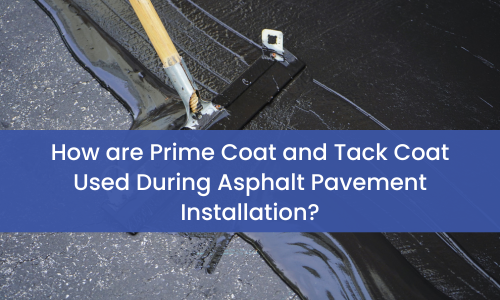
Asphalt pavement is installed one layer at a time, and to hold those layers in place, pavement contractors rely on prime coat and tack coat. However, they are not interchangeable as each serves a different purpose during an asphalt pavement installation project. Both are essential to your asphalt’s long-term durability and performance, whether it is for a new asphalt project or restoring existing asphalt pavement.
What is the Difference Between Prime Coat and Tack Coat?
Prime coat and tack coat offer similar benefits, but they are applied during different parts of the asphalt installation process. Here is a quick summary:
- Prime coat – Once the pavement’s base is prepared, prime coat is applied first. You can think of the prime coat the same way you would consider a paint primer. The prime coat interfaces with the base and ensures the rest of the asphalt sits on a stable foundation.
When applied, the prime coat permeates the base and binds its aggregates together. This improves uniformity in the prepared base, its weight bearing potential, and promotes better adhesion between the base and the overlaying asphalt.
Prime coat is typically made from cutback asphalt, which is a mix of petroleum solvent and asphalt cement, or with a low-viscosity asphalt emulsion. In both cases, the prime coat is designed to be thin enough to penetrate deep into the base. - Tack coat – Tack coat is also made from a lower viscosity asphalt emulsion and provides benefits similar to prime coat, including better adhesion and improved weight-bearing potential. However, instead of applying it to the base, tack coat is applied between asphalt layers and on top of the prime coat itself.
Tack coat is part of almost every asphalt installation or repair project. If a new layer of asphalt is going down at some point, tack coat will be used. In this way, tack coat acts like a bonding agent that essentially glues the asphalt’s various layers together and ensures they flex and wear together.
Tack coat is available in a variety of grades, and they all behave a little differently. Some are thicker, some are thinner. Some cure faster while some provide superior protection against moisture. An expert pavement contractor can identify which is the best option for your project.
- Prime coat – Once the pavement’s base is prepared, prime coat is applied first. You can think of the prime coat the same way you would consider a paint primer. The prime coat interfaces with the base and ensures the rest of the asphalt sits on a stable foundation.
How Do Prime Coat and Tack Coat Improve Asphalt Installation Quality?
Prime coat and tack coat are not just recommended for asphalt installation projects, they are essential. Without them, your asphalt pavement will fail years before its time and will likely experience ongoing durability and performance issues. Here are some of the reasons why:
- Prime coat and tack coat promote better bonding – Both prime coat and tack coat act like an adhesive, bonding the aggregates together either in the prepared base or in the asphalt layers themselves. With better bonding, the asphalt will possess greater structural integrity when exposed to heavy traffic.
- Prime coat and tack coat improve asphalt’s natural flexibility – Asphalt is a flexible pavement that is designed to bend and flex under traffic, and as long as it remains flexible, it will remain durable. Prime coat and tack coat help maintain this inherent flexibility by bonding the pavement’s aggregates together.
- Prime coat and tack coat boost asphalt’s load-bearing capacity – With better flexibility and adhesion between asphalt layers and the base, your asphalt will withstand heavier vehicle traffic while taking on less wear.
- Prime coat and tack coat preserve long-term pavement durability – In the end, your pavement-related expenses will correlate closely with how long the asphalt lasts, and how well the pavement is maintained. Prime coat and tack coat are essential parts of the asphalt installation process and will therefore maximize the return on your pavement investment.
- Prime coat and tack coat promote better bonding – Both prime coat and tack coat act like an adhesive, bonding the aggregates together either in the prepared base or in the asphalt layers themselves. With better bonding, the asphalt will possess greater structural integrity when exposed to heavy traffic.
The goal for property owners is to extract as much value as possible from their pavement. Asphalt contractors can deliver on this mission with proper use of prime coat and tack coat.
What Asphalt Projects Require the Use of Prime Coat and Tack Coat?
Whether you are looking to install a new asphalt parking lot or road, or just need some basic repairs, chances are that prime coat or tack coat will be applied at some point. Specifically, you will see these materials utilized during the following:
- New asphalt installation – During new asphalt installation prime coat will be applied as soon as the base is prepared. Once the base course is layered onto the base, tack coat will be applied to ensure the binder course and wearing course adhere to the pavement’s deeper structure.
Prime coat and tack coat will be applied in the same way during a full asphalt replacement project.
- Asphalt overlaying and other surface course treatments – Surface course treatments, which include overlaying, are a standard form of mid-life maintenance for asphalt pavement. While prime coat is not needed during surface course repairs, tack coat is applied either to the wearing surface itself before an overlay, or after the existing wearing course is milled out. If the wearing course is milled and removed, the tack coat is applied before a new wearing course is installed over the existing pavement.
- Major asphalt repairs such as potholes – If your asphalt requires extensive repairs of potholes, warping or widespread fractures, the failed stretches of pavement will need to be removed and replaced. Once the deteriorated asphalt has been extracted, tack coat will be applied to any exposed surfaces to promote better adhesion between the existing pavement and new hot mix asphalt.
- New asphalt installation – During new asphalt installation prime coat will be applied as soon as the base is prepared. Once the base course is layered onto the base, tack coat will be applied to ensure the binder course and wearing course adhere to the pavement’s deeper structure.
A Reputable Pavement Contractor Relies on High Quality Prime Coat and Tack Coat
No asphalt installation project is complete without proper use of prime coat and tack coat. If you are in the market for a new piece of asphalt pavement, work with a reputable paving contractor that used prime coat and tack coat in their processes. It is considered best practices to do so, and it will ensure your organization gets the most out of its new asphalt.

- Why Houston’s Expansive Clay Soil Makes Site Preparation Critical - August 21, 2026
- Drainage Fixes for Parking Lots: How to Spot Low Spots, Ponding and Base Failure Early - August 14, 2026
- Houston Hurricane Season: How to Protect Commercial Pavement - August 6, 2026