
Commercial Parking Lot Striping in Houston, TX
Your parking lot is the first part of your property that customers, tenants and employees use, and the striping tells every driver where to park, which way to turn and where pedestrians walk. When those lines fade, traffic gets confusing, accessible spaces become hard to identify and your property starts to look neglected. Professional commercial parking lot striping restores order, improves safety and keeps your lot in line with federal ADA standards and the Texas Accessibility Standards (TAS).
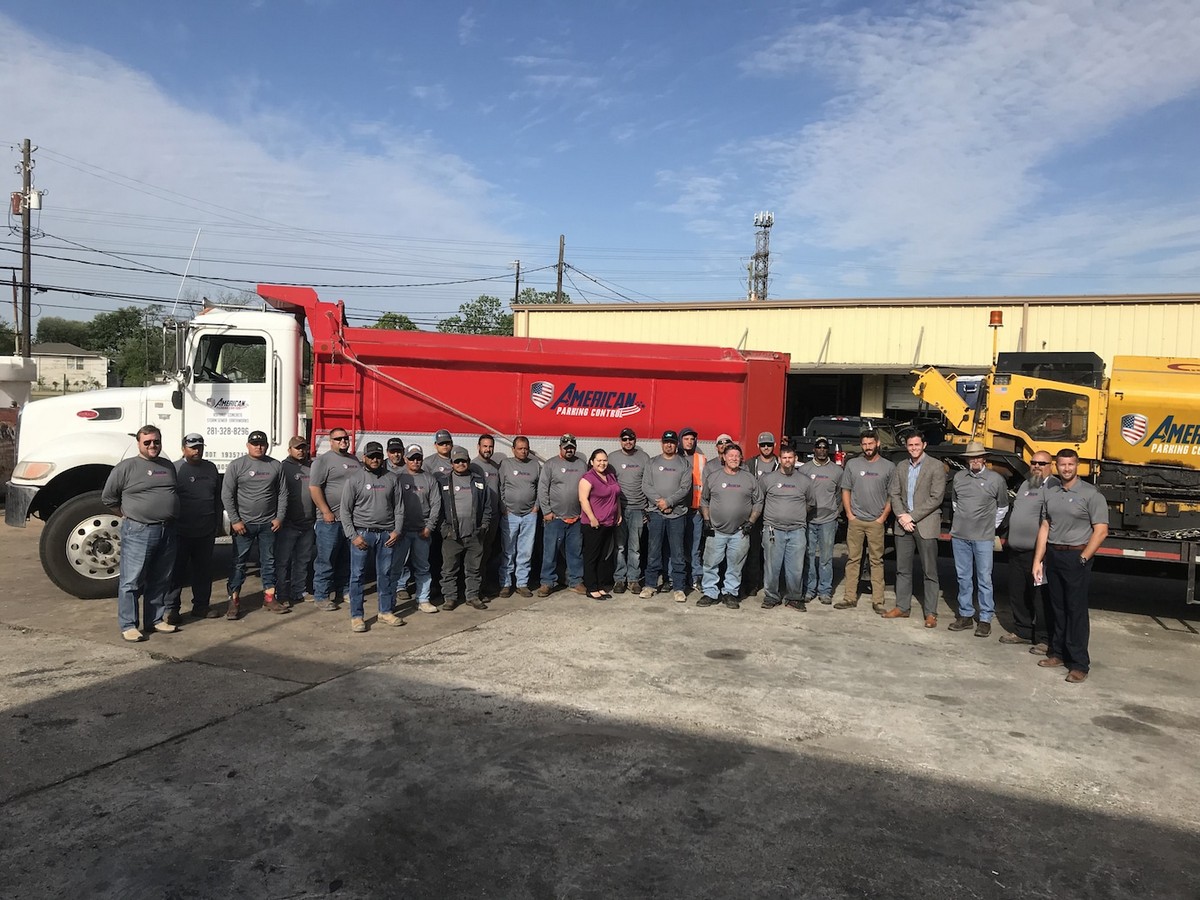
American Paving has served Houston property owners since 1984. Because we also handle asphalt paving and repair, concrete paving and site work, we can stripe a brand new lot, restripe an existing one, or lay out a completely new parking plan as part of a larger project. One insured and bondable contractor handles the pavement and the markings, so the job is coordinated from start to finish.
Request a Free Estimate
Tell us about your project and our team will reach out to schedule your estimate.
Parking Lot Striping Services for Houston Commercial Properties
Every commercial property has different traffic patterns, parking needs and compliance requirements. Our striping crews handle the full range of pavement markings, including:
- New parking lot layout and striping – After a new asphalt or concrete lot is built and cured, we lay out and stripe parking stalls, drive lanes and traffic markings according to your approved site plan.
- Parking lot restriping – Faded lines can be repainted on the existing layout, or the lot can be re-laid out to add spaces, improve traffic flow or bring accessible parking up to current standards.
- Restriping after maintenance – Sealcoating, asphalt overlays and asphalt milling cover or remove existing markings. We stripe the lot once that work is finished so it can reopen quickly.
- ADA accessible parking – Accessible spaces, access aisles, the International Symbol of Accessibility and van-accessible spaces, marked to the dimensions required by ADA and TAS.
- Fire lanes and curb markings – Fire lane striping and lettering, painted curbs and no-parking zones that help keep emergency access routes clear.
- Directional arrows, crosswalks and stop bars – Traffic arrows, pedestrian crosswalks, stop bars and stenciled lettering that keep vehicles and people moving safely through the property.
- Stenciling and custom markings – Space numbers, reserved and visitor parking, compact spaces and other stenciled markings that match how your property operates.
Why Does Parking Lot Striping Matter for Your Business?
Striping is one of the least expensive parts of pavement maintenance, but it affects how your entire property works. Our article on commercial parking lot striping in Houston walks through when striping is needed and what the work involves.
Traffic flow and efficiency
Clear stalls, drive lanes and arrows keep vehicles moving in one direction, reduce congestion at entrances and help visitors find a space quickly, even at peak hours.
Safety and liability
Crosswalks, stop bars and well-defined lanes separate vehicles from pedestrians. Faded or missing striping can contribute to accidents, and property owners may be held liable when poor markings play a role.
Accessibility compliance
Commercial properties must provide accessible parking that meets federal ADA standards and the Texas Accessibility Standards. Visible, correctly sized markings are part of that requirement, and our guide to ADA parking lot striping requirements explains what Houston businesses need to know.
Curb appeal
Crisp, high-contrast lines make an older lot look maintained and a new lot look finished. For retail centers, office buildings and medical facilities, that first impression matters to customers and tenants.
What Do ADA and Texas Accessibility Standards Require?
Accessible parking is the part of a striping project with the least room for error. Under the 2010 ADA Standards for Accessible Design, the U.S. Department of Justice treats restriping as an opportunity to bring accessible parking into compliance, so a restripe is the right time to confirm your lot meets current requirements.
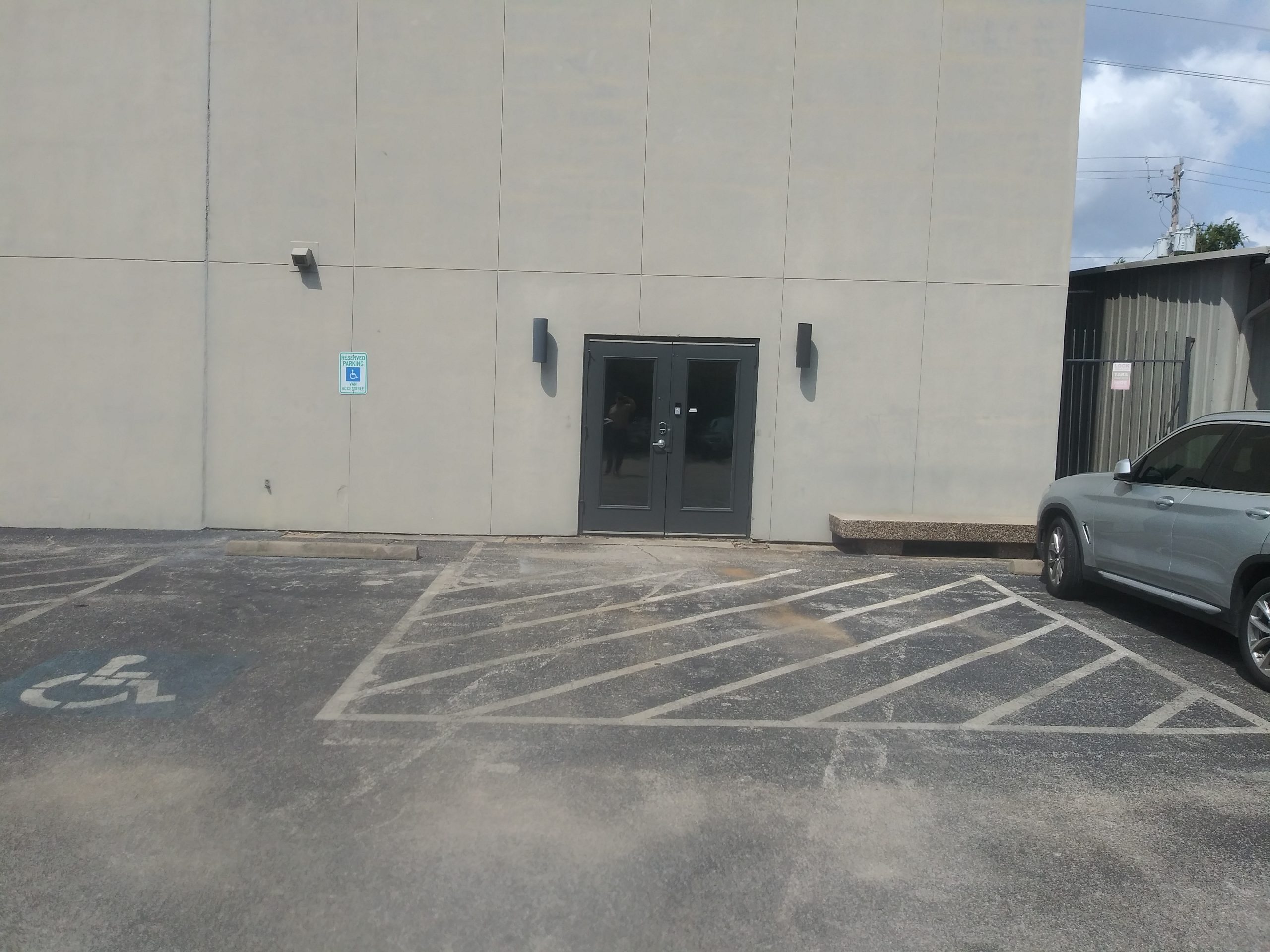
- Accessible car spaces must be at least 96 inches wide, with an adjacent access aisle at least 60 inches wide.
- At least one of every six accessible spaces, and never fewer than one, must be van accessible.
- The number of accessible spaces depends on the size of the lot. For example, a lot with 1 to 25 spaces needs at least 1 accessible space, and a lot with 76 to 100 spaces needs at least 4.
- Accessible spaces must be identified by signs mounted at least 60 inches above the ground, measured to the bottom of the sign.
- Parking spaces and access aisles must be nearly level, with a maximum slope of 1:48 in any direction.
Texas adds its own layer. Construction projects with a cost over $50,000 that fall under the Texas Architectural Barriers Act must be registered with the Texas Department of Licensing and Regulation (TDLR) and reviewed and inspected by a Registered Accessibility Specialist (RAS). For a deeper look at signage, slopes and common violations, read our article on ADA parking lot compliance in Texas.
Our crews lay out accessible spaces, aisles and symbols to the required dimensions so your striping supports your compliance plan rather than creating a new problem.
How Does the Commercial Parking Lot Striping Process Work?
Striping moves quickly compared to most pavement work, but good results depend on preparation and an accurate layout.
Site review and layout planning
We review your existing layout or site plan, count spaces, confirm accessible parking requirements and plan traffic flow, fire lanes and pedestrian routes before any paint goes down.
Pavement cleaning
The surface is swept, preferably power swept, so dust and debris do not interfere with adhesion. Clean pavement is the difference between lines that last and lines that peel.
Layout and marking
Stall lines, aisles and accessible spaces are measured and marked on the pavement so every line lands where it should.
Striping and stenciling
Lines are applied with walk-behind or ride-on striping equipment, and stencils are used for accessibility symbols, arrows and lettering that must meet tight standards.
Drying and reopening
Fresh striping is usually ready for light vehicle traffic in an hour or two. Allow a full 24 hours before heavier commercial traffic uses the lot. Large lots can be striped in phases so part of the property stays open.
Which Striping Paint Is Right for Your Parking Lot?
The right marking material depends on your pavement, your traffic and how long you want the lines to last. Common options for commercial lots include:
- Waterborne traffic paint – the most common choice for parking lot striping, with fast drying times and lower odor.
- Solvent-based traffic paint – often chosen for its adhesion in certain conditions, though it has more restrictions and a stronger odor.
- Thermoplastic markings – a thicker, heat-applied material used where markings take heavy wear, such as crosswalks and stop bars.
- Reflective glass beads – added to fresh paint to improve nighttime visibility under headlights.
Concrete parking lots also require a different type of striping paint than asphalt, so properties with both surfaces need a contractor experienced with each. We will recommend a material based on your pavement, traffic volume and budget.
How Often Should Your Parking Lot Be Restriped?
Properly applied striping typically lasts at least a year and can last up to five years. In Houston, heavy commercial traffic, intense sun and severe rain can shorten that timeline considerably, which is why we recommend inspecting your lot regularly. Our article on how often parking lot striping should be redone covers the warning signs in more detail.
Plan to restripe when:
- Lines, arrows or accessibility symbols are faded, chipped or hard to see at night
- Your lot has just been sealcoated, overlaid or milled and repaved
- You are changing the layout, adding spaces or updating accessible parking
- Tenants, customers or inspectors report confusion about parking or traffic flow
Striping performs best on sound pavement. If your lot has cracks or potholes, address them first with asphalt crack repair and a regular parking lot maintenance plan, then stripe the finished surface.
What Affects the Cost of Parking Lot Striping in Houston?
Every striping project is priced on its own scope. The main factors include:
- The size of the lot and the number of stalls, lines and markings
- Whether the job is a restripe of the existing layout or a new layout
- The number of accessible spaces, symbols, signs and stenciled markings
- The type of paint or marking material
- Surface preparation, including cleaning and covering old markings
- Whether the work is scheduled with sealcoating, repairs or other pavement work
- Phasing the work to keep part of the lot open
Bundling striping with other maintenance is often the most efficient approach, since the lot only needs to be closed once. Our guide to what determines the cost of asphalt services in Houston explains how these projects are typically scoped.
Why Houston Property Owners Choose American Paving
Striping is the final step in a parking lot project, and it shows. We bring more than four decades of commercial paving experience to every lot we stripe.
Serving Houston since 1984
Our team has been building and maintaining commercial parking lots across the Houston area for more than 40 years.
Insured and bondable
We work with property owners, facility managers and developers on commercial projects of every size.
One contractor for the whole lot
From site preparation and paving to repairs, sealcoating and striping, we handle the pavement and the markings, so there is no hand-off between contractors.
Asphalt and concrete experience
We stripe both asphalt and concrete surfaces and use the right materials for each.
Commercial Parking Lot Striping FAQs
Do you stripe both asphalt and concrete parking lots?
Yes. American Paving stripes both asphalt and concrete parking lots. Concrete requires a different type of striping paint than asphalt, so properties with both surfaces should work with a contractor experienced in each.
How soon can we reopen the parking lot after striping?
Fresh striping is usually ready for light vehicle traffic within an hour or two. Allow a full 24 hours before heavier commercial traffic uses the lot. Large lots can be striped in phases so part of the property stays open.
Does restriping require us to update accessible parking?
When a parking lot is restriped, the 2010 ADA Standards apply to the accessible spaces, so restriping is the time to confirm the number, size and location of accessible spaces and access aisles. Texas projects may also need to meet the Texas Accessibility Standards.
How many accessible parking spaces does my lot need?
It depends on the total number of spaces. A lot with 1 to 25 spaces needs at least 1 accessible space, 26 to 50 spaces needs 2, 51 to 75 needs 3 and 76 to 100 needs 4. At least one of every six accessible spaces must be van accessible.
Can you change the layout of an existing parking lot?
Yes. An existing lot can be re-laid out to add spaces, improve traffic flow or update accessible parking. The new layout is planned first, then striped on the cleaned surface.
Should striping be done after sealcoating?
Yes. Sealcoating covers existing lines, so the lot is striped after the sealcoat has dried. Scheduling both services together means the lot only needs to be closed once.
Schedule Commercial Parking Lot Striping in Houston
Whether you need a new lot striped, faded lines restored or accessible parking brought up to standard, our team is ready to help. Call 281-328-8296 or contact us to schedule a site visit and get a quote for your property.